Guide
How to be confident: build self-belief one small win at a time
Confidence isn't a personality trait you're born with. It's the reputation you build with yourself — and like any reputation, it's earned through a track record of kept promises.
Why confidence is built, not found
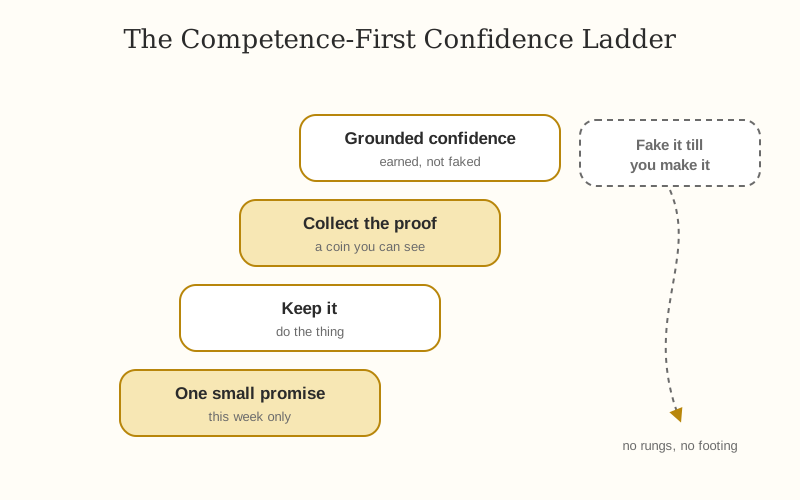
Most advice on how to be confident starts with how you feel: stand taller, think positively, imagine success. Feelings are the last thing to change, not the first. What actually moves is evidence. Every time you say you'll do something small and then do it, you add a data point to the case that you're reliable. Enough data points and self-doubt simply runs out of argument.
Psychologists call this self-efficacy: your belief that you can carry out the actions a situation needs. The strongest source of self-efficacy is mastery experience — actually succeeding at something. Small wins are the cheapest, fastest way to manufacture mastery experiences on purpose.
The psychology of small wins
A small win is a concrete, complete outcome of modest importance. It's small enough that failure is unlikely and real enough that success counts. Small wins work for three reasons:
- They lower the threat. Big goals trigger avoidance. A promise you're 90% sure you can keep doesn't.
- They compound. Each completed promise makes the next one more believable, so your capacity expands without a motivational spike.
- They're visible. Progress you can point to beats progress you have to feel. Tracked wins become proof you can revisit on the days you doubt yourself.
A 7-step weekly method
- Pick one promise for the week. One, not five. Specific, not aspirational.
- Shrink it until it's almost too easy. If you'd bet money on keeping it, it's the right size.
- Attach it to something you already do. After coffee, after work, before bed.
- Remove one obstacle in advance. Shoes by the door; phone in another room.
- Mark the win the moment it happens. Recording it is what turns an action into evidence.
- Take a bailout without guilt when life intervenes. A missed week only costs you if you use it as proof against yourself.
- Review the record every few weeks. Reading back your own kept promises is the fastest confidence boost there is.
How the Invisible Gold Coin system applies this
The Community Bank of Self-Belief turns this method into something you can actually see. Every member opens an account with ten Invisible Gold Coins — a starting balance of belief you didn't have to earn. Each week you write one small contract with yourself. Keep it, and you claim a coin. Miss it, and you take a Belief Bailout: no penalty, no lost coins, no lecture.
The coins are symbolic, and that's the point. They're a running ledger of the promises you've kept, held somewhere you can't quietly forget them. Alongside the ledger there's a community feed where other members' wins are visible too — because watching people like you succeed is the second-strongest source of self-efficacy after doing it yourself.
The system is drawn from the book The Community Bank of Self-Belief by Tony Egar.
Read next: the weekly contract method, how to celebrate small wins, 25 small wins examples and finding an accountability partner.
Common mistakes when building confidence
- Starting too big. An ambitious promise broken in week one costs more confidence than a small one gains.
- Chasing a feeling. Waiting to feel confident before acting reverses the actual order of cause and effect.
- Not recording anything. Unrecorded wins are forgotten within days; your brain keeps the failures instead.
- Treating a miss as a verdict. Self-punishment predicts quitting; a clean restart predicts continuing.
Frequently asked questions
- How long does it take to become more confident?
- Most people notice a shift within 3–6 weeks of keeping one small weekly promise. Confidence grows from the accumulated evidence that you do what you say you'll do, so consistency matters far more than the size of each promise.
- What if I break a promise to myself?
- Breaking a promise is data, not failure. Make the promise smaller, remove one obstacle, and restart the same week. A missed week only damages confidence when you punish yourself for it — take the bailout and keep going.
- Is confidence the same as self-esteem?
- No. Self-esteem is how you value yourself overall; confidence is your expectation that you can handle a specific thing. Confidence is built through action and evidence, which is why small repeated wins work so well.
- What are examples of small wins?
- A ten-minute walk three times a week, one page of reading a night, sending one message you've been avoiding, or making your bed each morning. The right size is one you're 90% sure you can keep.
Start with ten coins today
Open an account, write one small promise, and start building the record.
Open your account