Guide
Streak fatigue: why daily streaks break habits (and what to do instead)
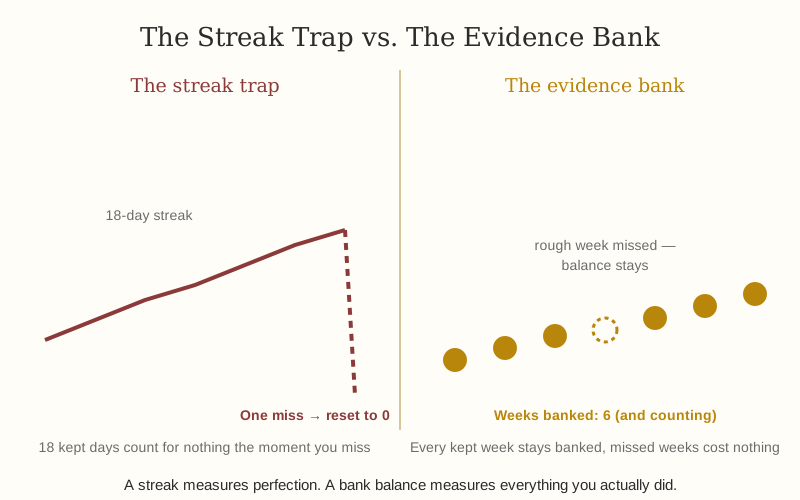
If you've ever lost a long streak, you know the exact moment you stopped caring. It isn't when you missed the day — it's when you opened the app and watched months of effort reset to zero.
The cycle that keeps repeating
You download a habit app in a burst of motivation. The streak grows: twelve days, eighteen days, a badge at thirty. Then a fever, a funeral, or an ordinary bad Tuesday breaks the chain — and the app shows you a new number. Not thirty days kept, one missed. Zero.
That number is the whole story the app tells about you, and nobody keeps working for an account that says their work didn't happen. The pattern is so common it might be the single most reliable way habit apps lose people.
What a streak actually measures
A streak measures the size of your last mistake, not the size of your progress. Two people can complete the same habit on 95 of the last 100 days — the one who missed 5 days in a row wears a broken badge, and the one who missed 5 scattered days has a smaller number. Neither number reflects how much they've actually done.
Worse, a streak quietly changes what you're optimising for. When the chain is the point, you start doing easy days to protect it, counting borderline days as wins to keep it, and dreading the one you can't control. The habit becomes a job with a tripwire in it.
What to track instead: total evidence
The humane alternative is a count that never goes down. Total days finished, total pages read, total promises kept — call it a total, a record, or a balance. Whatever the name, it works because:
- A miss costs zero, not everything. The worst a bad week can do is leave the number unchanged.
- It measures what psychologists call mastery. Self-belief comes from accumulated evidence of follow-through, and evidence accumulates — it doesn't evaporate when you rest.
- Restarting counts. Coming back after an off week is itself a win, instead of a fresh start from nothing.
One word of balance: a streak isn't useless — early on, the short-term pressure helps. The mistake is building the whole system on it. Streaks are scaffolding; a total is the building.
How to switch a habit off streaks
- Track the total, not the chain. Choose any record that only ever rises: days done, sessions completed, coins banked.
- Make the unit weekly, not daily. A week gives you room for a bad Tuesday without the whole record collapsing.
- Shrink the promise on a heavy week. Halve it rather than skip it — a five-minute walk is still evidence.
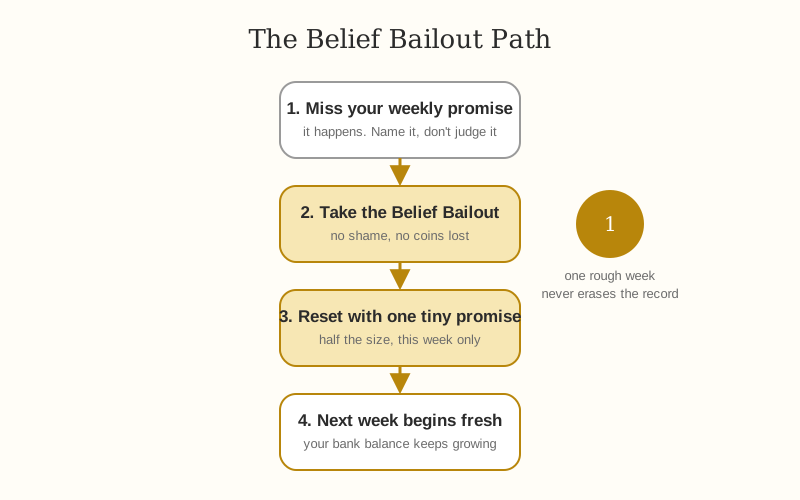
- Forgive formally. When a week is missed, take a deliberate reset with no penalty, then make the next promise smaller than usual.
- Keep the record somewhere visible. A growing balance you can look back over is the part that actually changes how you see yourself.
Our approach: forgiveness built in
At The Community Bank of Self-Belief we never counted streaks. Each week you make one small promise to yourself; keep it, and you bank an Invisible Gold Coin that never expires. Miss the week, and you take a Belief Bailout — no penalty, no lost coins, no reset to zero. The balance is the total-evidence record: six weeks in, it says 6 coins, 6 kept promises, no matter how the calendar fell.
Frequently asked questions
- What is streak fatigue?
- Streak fatigue is the burnout that sets in when your progress is judged by an unbroken streak. Because one missed day resets the count to zero, the streak stops feeling like encouragement and starts feeling like a debt you owe every single day — which is exactly when people quit.
- Why do streaks break habits instead of building them?
- A streak rewards the narrow win of keeping the chain alive, not the broader outcome of doing the thing. Once the number feels like the point, a rough day costs more motivation than the habit gained in a week — and the reset to zero takes your whole record down with it.
- Is a total count better than a streak?
- For most people, yes. A total — days finished, pages read, coins banked — never decreases. A missed day adds zero instead of subtracting everything, so the record always shows accumulated evidence of follow-through rather than how recently you slipped.
- What should I do after I miss a day or a week?
- Forgive it formally, not mentally. Take a deliberate reset — one small promise for the next period, smaller than usual — and keep your total intact. The win to chase is restarting quickly, not repairing the streak.
Ditch the streak. Bank the evidence.
Open an account with ten coins and one small weekly promise — nothing you do can ever take them away.
Open your accountRelated reading: 25 small wins examples, how to celebrate small wins, and an accountability app without the surveillance.